
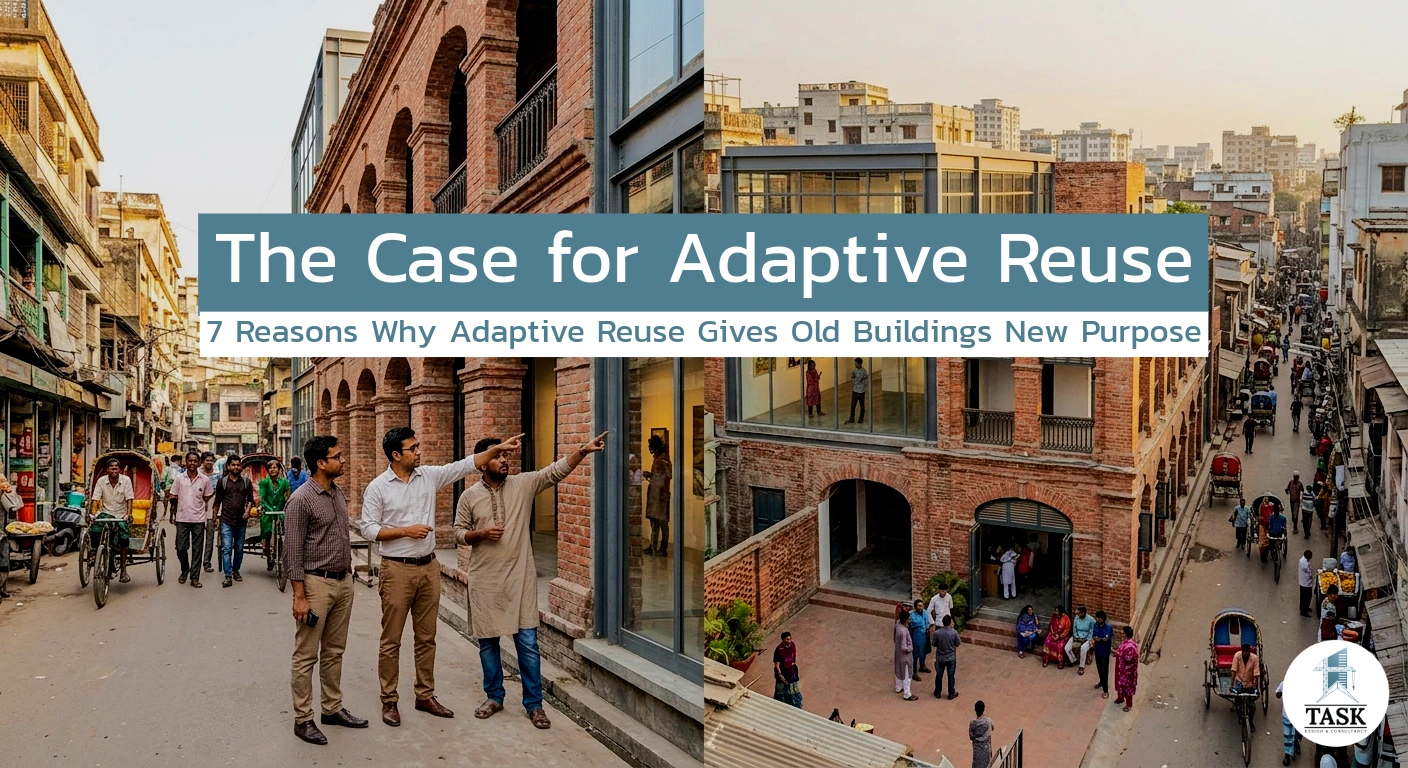
Architecture Firm in Dhaka: 7 Reasons Why Adaptive Reuse Gives Old Buildings New Purpose
Architecture Firm in Dhaka: The Case for Adaptive Reuse
Old buildings carry something new construction rarely can — weight, character, and history embedded in every wall. As Dhaka continues to grow and urbanize, architecture firms in Dhaka are increasingly turning to adaptive reuse as a smarter alternative to demolition: taking structures that have outlived their original purpose and reimagining them as homes, offices, galleries, or community spaces. It costs less, wastes less, and often produces spaces that feel more alive than anything built from scratch.
In the face of rapid urbanization, climate change, and the increasing demand for sustainable development, adaptive reuse has emerged as a smart, cost-effective, and environmentally responsible alternative to demolition and new construction. Adaptive reuse refers to the process of repurposing old, historic, or unused buildings for a use different from what they were originally designed for — transforming them into homes, offices, museums, retail spaces, or community centers.
Rather than tearing down outdated structures, adaptive reuse gives them a new life, blending the charm of the past with the functionality of the present.
1. Environmental Sustainability
Why It Matters:
The construction industry is a major contributor to global carbon emissions and waste generation.
Benefits:
- Reduces Construction Waste: Demolishing old buildings produces large quantities of debris. Reusing structures helps divert tons of waste from landfills.
- Minimizes Embodied Carbon: Retaining the original building materials saves the carbon that would otherwise be released from manufacturing and transporting new materials.
- Preserves Greenfield Land: By reusing existing sites, adaptive reuse reduces the pressure to develop on undeveloped land.
Result:
A significantly smaller environmental footprint compared to new builds.
2. Cost Efficiency
Why It Matters:
Construction and material costs are rising globally. Adaptive reuse can help manage expenses.
Benefits:
- Lower Material Costs: Reusing existing structural components such as walls, floors, and roofing reduces the need for new materials.
- Shorter Construction Timeline: Adaptive reuse can often proceed faster than new builds since the structural framework is already in place.
- Tax Incentives: In many countries, governments offer grants, tax credits, or financial incentives for rehabilitating heritage or historic buildings.
Result:
Greater return on investment (ROI) and a more affordable path to functional space.
3. Cultural and Historical Preservation
Why It Matters:
Old buildings often embody the history, character, and identity of communities.
Benefits:
- Protects Heritage: Adaptive reuse retains architectural details that would be lost with demolition — preserving craftsmanship, design, and legacy.
- Strengthens Community Identity: Restored buildings become symbols of pride and continuity for neighborhoods.
- Attracts Tourism and Business: Heritage buildings converted into hotels, galleries, or cultural centers add aesthetic and historical value to their surroundings.
Result:
A meaningful link between past and present that enriches urban life.
Visit: Barakah Condominum, a thoughtfully planned residential complex situated within the rapidly growing Priyanka Runway City township in Uttara, Dhaka.
4. How Every Architecture Firm in Dhaka Is Revitalizing Urban Areas
Why It Matters:
Many cities face challenges with abandoned or underutilized buildings, especially in post-industrial zones. Dhaka is no exception — older commercial and industrial structures across the city sit dormant while demand for functional, well-designed space continues to grow.
Benefits:
- Reactivates Blighted Areas: Adaptive reuse brings activity back to dormant neighborhoods, increasing safety and economic vitality.
- Increases Property Values: Revitalized structures tend to boost surrounding real estate value and attract further investment.
- Stimulates Local Economies: Projects often involve local tradespeople, suppliers, and professionals, supporting local employment.
Result:
A positive ripple effect on urban regeneration and economic growth.
5. Architectural Character and Aesthetic Appeal
Why It Matters:
Contemporary architecture can sometimes lack the character and craftsmanship of older buildings.
Benefits:
- Unique Design Opportunities: Designers can creatively blend modern elements with vintage materials, exposed brick, beams, and historic facades.
- Authenticity: Reused buildings offer charm and character that is difficult to replicate in new construction.
- Increased Marketability: Tenants and consumers are often drawn to the ambiance and originality of restored spaces.
Result:
Distinctive, attractive spaces that stand out in a crowded market.
This is an area where Task Design & Consultancy has hands-on experience. Several of the firm’s projects have involved working within existing structural constraints — finding creative ways to modernize spaces without erasing what gives them character. The result is almost always more interesting than a blank-slate build, and clients consistently respond to the authenticity of spaces that have a story behind them.
6. Functional Adaptability
Why It Matters:
Many older buildings were built to last and are structurally strong, allowing them to be reimagined in multiple ways.
Benefits:
- Versatile Use Cases: Warehouses become art studios, churches become bookstores, and factories become loft apartments.
- Scalability: Interiors can often be redesigned or expanded to meet current spatial requirements.
- Compliant Upgrades: New technology, accessibility improvements, and energy-efficient systems can be added without altering the core structure.
Result:
Future-ready buildings adapted for modern use.
7. Faster Community and Stakeholder Approvals
Why It Matters:
Community opposition and lengthy planning approval processes can delay or derail new developments.
Benefits:
- Community Support: Residents are often more receptive to reusing familiar landmarks than to new construction.
- Easier Permitting: Historic adaptive reuse projects may qualify for streamlined approvals or exemptions.
- Public-Private Collaboration: Adaptive reuse projects often attract support from local governments, nonprofits, and community groups.
Result:
Smoother development process with less resistance and greater local involvement.
Challenges and Considerations
While adaptive reuse offers significant advantages, it does come with unique challenges:
- Structural Limitations: Some buildings may require reinforcement to meet modern codes.
- Hazardous Materials: Asbestos, lead paint, or mold may be present in older structures.
- Design Constraints: Architects must work creatively within existing layouts and architectural features.
- Cost Surprises: Unexpected issues can arise once renovation begins, requiring flexibility in budgeting.
Solution:
Conduct thorough feasibility studies, structural assessments, and historical research early in the planning phase.
Why Every Architecture Firm in Dhaka Is Embracing Adaptive Reuse
Adaptive reuse is more than a trend — it’s a responsible and genuinely impactful approach to architecture that balances preservation with progress. Whether the goal is converting a warehouse into a workspace or breathing new life into a heritage structure, the process rewards thoughtful design and careful planning.
If you’re considering an adaptive reuse or renovation project in Dhaka, Task Design & Consultancy’s architectural team has the structural and design expertise to assess what’s possible and deliver it properly. Get in touch at contact@taskdnc.com or visit taskdnc.com.


