Dream Home Design Bangladesh: 8 Proven Key Elements
Dream Home Design Bangladesh: 8 Key Elements You Should Never Skip
Dream home design Bangladesh is a phrase that gets used loosely — applied to anything from a Pinterest mood board to a fully engineered residential project. The gap between the two is enormous, and it is precisely the gap that determines whether the home you eventually move into actually feels like the one you imagined, or like a compromised version of it shaped by decisions made too late or too quickly.
Designing a home from the ground up is one of the most significant financial and emotional investments most people will make in their lifetime. It is also genuinely complex — dozens of interconnected decisions about location, budget, layout, materials, and technology, each of which affects the others in ways that are not always obvious until construction is already underway.
This guide walks through eight key elements that any serious approach to dream home design Bangladesh needs to address — not as an exhaustive checklist to complete mechanically, but as a framework for the kind of thinking that produces a home genuinely suited to the people who will live in it.
Why Dream Home Design Bangladesh Requires Local Thinking, Not Imported Templates
A significant amount of home design guidance available online is written for climates, regulatory environments, and cultural contexts that simply do not apply in Bangladesh. Advice about hurricane-resistant construction, four-season insulation strategy, or stilted foundations for snow load is not relevant here — and applying it directly, without translation into Bangladesh’s actual conditions, produces designs that solve problems that don’t exist while missing the ones that do.
Genuine dream home design Bangladesh requires thinking calibrated to this specific context: a tropical climate with intense heat and a monsoon season rather than four temperate seasons, RAJUK approval and BNBC 2020 compliance rather than generic building codes, multi-generational household patterns rather than the nuclear-family assumptions baked into most Western design content, and a construction cost environment that has risen nearly 20% over the past year alone.
Every element discussed below is framed with this local context in mind.
1. Location and Site Planning
The site you build on shapes every subsequent design decision, which makes location the genuine starting point for dream home design Bangladesh rather than an administrative detail to be settled before the “real” design work begins.
Climate and orientation matter enormously in Bangladesh’s tropical conditions. South-facing orientation generally provides the most manageable natural light throughout the year, while west-facing exposure creates the most difficult afternoon heat to manage. Thick walls with genuine thermal mass, generous shaded verandas, and passive cooling strategies suited to heat and humidity matter far more here than the insulation-focused strategies that dominate temperate-climate design guidance. During the monsoon season, drainage, roof design, and waterproofing detail become critical considerations that a dream home design Bangladesh approach cannot treat as secondary.
Topography affects layout flexibility — a flat site offers more straightforward design options, while a sloping or irregular site may require specific foundation and structural solutions, though stilted construction for flood-prone low-lying areas is a genuinely relevant consideration in parts of Bangladesh in a way it rarely is elsewhere. Views and surrounding context — neighboring buildings, road access, green space — should inform window placement and outdoor space design from the earliest planning stage.
Accessibility and infrastructure deserve equal attention: reliable water supply, electricity, sewage connection, and internet access, alongside proximity to schools, workplaces, and essential amenities, all directly affect daily quality of life in ways that are easy to overlook during the excitement of early design conversations.
2. Budget and Financial Planning
Establishing a realistic, comprehensive budget is foundational to dream home design Bangladesh — and it is also where the most consequential mistakes happen, because budgets are frequently set before the full scope of a project is properly understood.
Land cost varies enormously by location in Dhaka and across Bangladesh, and should account for not just the purchase price but registration costs, stamp duty, land preparation, and any title-related legal fees. Construction costs, which have risen nearly 20% over the past year with steel prices nearly doubling, should be estimated through a detailed, itemized breakdown rather than a single per-square-foot figure that leaves significant scope unspecified.
A contingency fund of 10 to 15% of total budget is essential for any dream home design Bangladesh project — construction delays, design changes, and unforeseen site conditions are the norm rather than the exception, and a project without financial buffer is a project where any surprise becomes a crisis. Long-term costs deserve consideration alongside upfront construction cost: ongoing utility expenses, maintenance requirements, and property tax all affect the genuine lifetime cost of the home, and energy-efficient design choices made now reduce these costs significantly over the building’s lifespan.
3. Lifestyle and Functional Requirements
The most successful dream home design Bangladesh projects begin not with a style or an aesthetic but with an honest, detailed understanding of how the household actually lives — because every subsequent design decision should serve that reality rather than a generic assumption about how families function.
Family size and growth trajectory matter significantly. A young couple’s current needs differ substantially from what the same family will need in five or ten years, and a flexible floor plan that can accommodate additional bedrooms, a home office, or space for aging parents joining the household saves enormous future renovation cost. Work-life balance has become a central design consideration as remote and hybrid work have become permanent fixtures of professional life — a dedicated, acoustically separated home office is now a near-essential element rather than an optional extra in serious dream home design Bangladesh planning.
Entertaining and social space matters particularly in Bangladeshi culture, where hospitality and frequent gatherings are culturally central. A spacious kitchen with adequate preparation surface, a living and dining area capable of accommodating extended family gatherings, and outdoor or semi-outdoor space for entertaining all deserve genuine design attention rather than being treated as secondary to bedroom and bathroom specification. Storage requirements are consistently underestimated — dream home design Bangladesh should build in significantly more storage than current possessions seem to require, since storage needs grow substantially over a family’s years in a home.
4. Architectural Style and Aesthetic Appeal
Style is the most visible element of dream home design Bangladesh, but it works best when it emerges from the functional and contextual decisions already made, rather than being selected independently and imposed onto the plan afterward.
Interior design style preferences span a wide range — clean-lined modern design, richly detailed traditional aesthetics, a contemporary blend of both, or rustic approaches built around natural materials. None of these is inherently correct; what matters is genuine alignment between the chosen style and how the household actually wants to live, alongside honest consideration of which style suits Bangladesh’s climate and available materials most naturally.
Exterior design and curb appeal deserve as much consideration as interior planning. Facade design should complement both personal taste and the surrounding context, while roofing material selection needs to account specifically for monsoon performance and heat resistance rather than purely aesthetic preference. Landscaping — even modest planting in a dense urban plot — meaningfully improves both curb appeal and the daily experience of approaching and leaving the home.
Indoor-outdoor connection deserves particular emphasis in dream home design Bangladesh given the climate. Verandas, balconies, and semi-open transitional spaces that connect interior living areas to the outdoors are not a luxury feature — they reflect a design tradition that has worked in this climate for generations and remain genuinely relevant to contemporary residential design.
5. Sustainability and Energy Efficiency
Sustainable design has moved from a niche preference to a practical necessity in dream home design Bangladesh, given both rising energy costs and Bangladesh’s particular vulnerability to climate-related pressures on infrastructure and resources.
Passive design principles — strategies that work with the climate rather than against it — should be the foundation of any serious approach. Optimal window placement and orientation for natural light and ventilation, materials with genuine thermal mass that moderate indoor temperature swings, and proper insulation appropriate to tropical rather than temperate conditions all reduce dependence on mechanical systems significantly.
Energy-efficient systems add a further layer of performance: solar panels, increasingly viable given Bangladesh’s abundant sunlight and rising grid electricity costs, energy-efficient appliances and lighting that reduce ongoing consumption, and smart thermostats or control systems that optimize heating and cooling — or in Bangladesh’s case, predominantly cooling — based on actual occupancy patterns.
Sustainable material selection — locally sourced timber, bamboo, clay tiles, and low-VOC finishes — both reduces environmental impact and frequently performs better in Bangladesh’s climate than imported synthetic alternatives, while supporting local material economies in the process.
6. Technology Integration
Technology integration in dream home design Bangladesh has moved from a luxury consideration to an expected baseline, and the infrastructure decisions made during construction determine how easily the home can adopt new technology over its lifetime.
Smart home features — lighting and thermostat control, security systems with cameras and smart locks, broader home automation covering everything from entertainment systems to window coverings — are increasingly accessible and increasingly expected, even in mid-range residential projects. Robust wiring and connectivity infrastructure deserves attention at the design stage specifically because retrofitting comprehensive internet and smart-device wiring after construction is significantly more expensive and disruptive than planning for it from the start.
Dedicated entertainment spaces — a home theater room or media center with proper acoustic treatment and comfortable seating — represent a meaningful lifestyle investment for households that prioritize this kind of shared family time, and deserve genuine acoustic and spatial planning rather than being treated as an afterthought retrofitted into a leftover room.
7. Future-Proofing the Design
The most sophisticated dream home design Bangladesh projects are designed not just for the household’s needs today but for how those needs will evolve over the decades the family will actually live in the home.
Adaptable spaces — rooms designed with multiple potential uses, structural systems that allow non-load-bearing walls to be modified without major intervention — accommodate family growth and changing circumstances far more gracefully than rigidly single-purpose rooms. Aging-in-place considerations deserve serious attention given Bangladesh’s strong multi-generational household culture: wider doorways, non-slip flooring, accessible bathroom fittings, and thoughtful consideration of stair and level changes all matter significantly when elderly family members are likely to join the household at some point during the building’s lifetime.
Technology infrastructure that anticipates future upgrades — additional electrical capacity, conduit pathways for future wiring, structural allowance for solar panel installation even if not implemented immediately — costs comparatively little to incorporate during initial construction and a great deal more to retrofit later.
8. Professional Guidance and Genuine Engineering Oversight
The element most consistently missing from generic dream home design Bangladesh advice — including much of what circulates online — is the genuine necessity of professional architectural and engineering involvement throughout the entire process, not just at the initial design stage.
A home design that addresses every element discussed above only produces the intended result if it is executed with genuine structural integrity, BNBC 2020 compliance, and proper RAJUK approval. Professional involvement from BUET-trained architects and engineers ensures that ambitious design intentions translate into a structurally sound, code-compliant, genuinely durable building — rather than a beautiful set of drawings that encounters serious problems once construction begins.
This is the difference between dream home design Bangladesh as an aspirational concept and dream home design Bangladesh as a genuinely deliverable outcome. The elements covered throughout this guide — site planning, budget, lifestyle requirements, style, sustainability, technology, and future-proofing — all depend on professional execution to become real rather than remaining theoretical.
Bringing It All Together
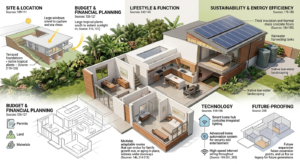
Dream home design Bangladesh succeeds when these eight elements are considered together, as an interconnected system, rather than addressed individually in isolation. A beautiful a
rchitectural style applied to a poorly planned site fails. A generous budget without functional planning produces an expensive home that doesn’t actually work for how the family lives. Sustainable systems specified without genuine climate-appropriate passive design underperform their potential.
The households who end up genuinely satisfied with their completed home are consistently the ones who approached dream home design Bangladesh as a comprehensive process from the very beginning — working with experienced professionals who understand both universal design principles and the specific climatic, cultural, and regulatory realities of building in Bangladesh today.
Task Design & Consultancy’s Approach to Dream Home Design
Task Design & Consultancy approaches dream home design Bangladesh as the comprehensive, interconnected process described throughout this guide — not a checklist completed in isolation, but a genuinely coordinated approach spanning site analysis, budget planning, architectural design, structural engineering, and construction supervision under a single accountable team.
The firm’s BUET-trained architects and engineers bring both the technical credentials and the local climate expertise necessary to translate a household’s vision into a structurally sound, RAJUK-approved, BNBC 2020 compliant home — built to perform genuinely well in Bangladesh’s specific conditions rather than applying imported design templates without adaptation.
For households who want to see what this approach produces in practice, Barakah Condominium at Priyanka Runway City in Uttara reflects many of the same principles discussed throughout this guide: thoughtful site planning, south-facing orientation for optimal natural light, 40% open space, and full RAJUK approval. Tower B has a limited number of remaining units.
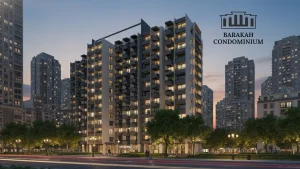
Visit: Barakah Condominium, a thoughtfully planned residential complex situated within the rapidly growing Priyanka Runway City township in Uttara, Dhaka.
If you are beginning the process of designing your dream home in Bangladesh and want a team capable of guiding you through every element discussed in this guide, get in touch at contact@taskdnc.com, visit taskdnc.com, or reach out via WhatsApp to arrange a consultation.
Frequently Asked Questions About Dream Home Design Bangladesh
How long does the design process typically take before construction begins?
A thorough dream home design Bangladesh process — covering site analysis, detailed briefing, design development, structural engineering, and RAJUK approval — commonly takes several months before construction can begin. Rushing this stage to start construction sooner almost always costs more time and money than it saves, since design changes during construction are the most expensive and disruptive kind.
Should I buy land first or find an architect first?
Involving an architect before finalizing a land purchase is genuinely valuable when possible — orientation, topography, and site constraints significantly affect what is achievable, and professional input before purchase can prevent buying a plot that creates avoidable design limitations. When land is already secured, dream home design Bangladesh simply begins with a thorough site assessment as the first formal step.
What’s the difference between an architect and a contractor for this kind of project?
An architect handles design, structural planning, and regulatory approval; a contractor executes the physical construction. For dream home design Bangladesh, working with a firm that provides both architectural design and construction supervision under one accountable team reduces the coordination gaps and miscommunication that arise when these roles are split across separate, uncoordinated parties.
How much should I budget for professional design and engineering fees?
Professional fees vary by project scope and firm, but should be understood as an investment that prevents costly mistakes rather than an expense to minimize. The cost of correcting a poorly designed layout or a non-compliant structural decision after construction has begun routinely exceeds the professional fees that would have prevented the problem in the first place.