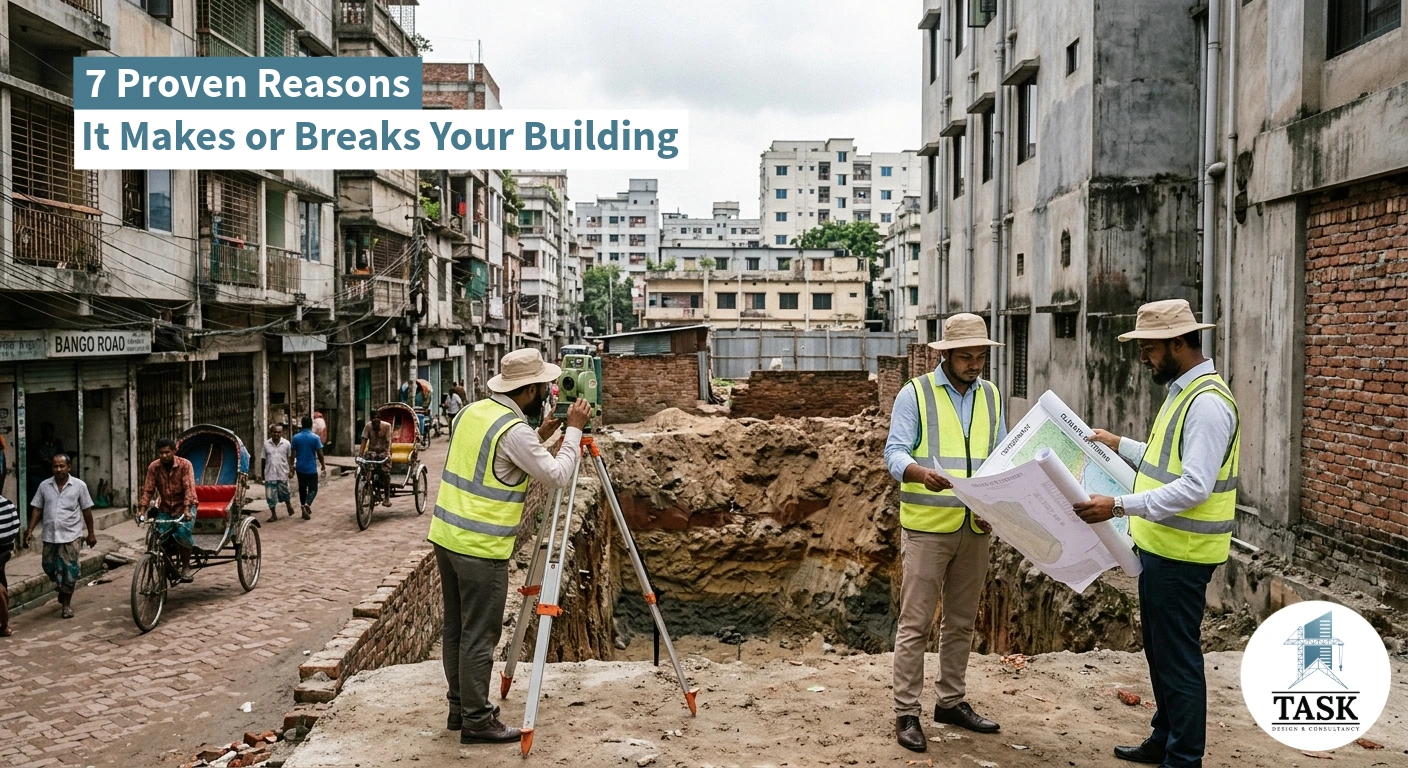
Site Analysis Architecture Bangladesh: 7 Proven Reasons
Site Analysis Architecture Bangladesh: 7 Proven Reasons It Makes or Breaks Your Building
Site analysis architecture Bangladesh is not a preliminary formality that architects complete before getting to the “real” design work. It is the design work — or at least the foundation on which every subsequent design decision either stands or collapses. A building conceived without thorough site analysis is a building designed in the abstract, divorced from the specific physical, environmental, and regulatory realities of the land it will actually occupy.
In Bangladesh’s specific context, this matters more than most generic architectural guidance acknowledges. Dhaka’s dense urban fabric creates site conditions that differ dramatically from plot to plot — in terms of neighboring building heights that affect sunlight access, soil conditions that vary significantly across the city, monsoon drainage patterns that can make or break a foundation strategy, and RAJUK regulations that impose specific constraints on what can be built where and how tall. A site analysis architecture Bangladesh process that genuinely addresses these local conditions is the difference between a building that performs well for decades and one that begins creating problems within its first few years.
This guide walks through the seven most critical components of site analysis architecture Bangladesh and explains exactly why each one matters — both in principle and in the specific context of building in Bangladesh today.
What Is Site Analysis Architecture Bangladesh?
Site analysis architecture Bangladesh is a methodical assessment of the physical, environmental, social, and regulatory characteristics of a building plot before any design work begins. It involves systematically examining every factor that could influence how a building should be designed, oriented, structured, and finished — so that design decisions are made in response to real conditions rather than assumed ones.
The components of a proper site analysis architecture Bangladesh process include topography and ground conditions, climate and orientation, soil composition and drainage, vegetation and surrounding context, regulatory and zoning frameworks, cultural and historical context, and the relationship between the site and its neighboring structures and infrastructure. Each of these is examined in detail below — because understanding what thorough site analysis actually involves is the first step toward demanding it from any firm you work with.
1. Topography and Site Conditions
Topography is the physical starting point of any site analysis architecture Bangladesh process. The shape of the land — its slopes, contours, elevation, and natural features — directly determines how a building can be placed, how its foundation must be designed, and how circulation around and through it will function.
In Dhaka’s urban environment, most residential and commercial plots are relatively flat, which simplifies foundation design considerably compared to sloped sites. However, flat does not mean uniform — variations in surface drainage, proximity to water bodies, and the compaction history of the land all affect what foundation approach is appropriate. In areas outside Dhaka, or on plots adjacent to natural water features, topographic variation can be significant enough to require terraced designs, special foundation systems, or structural approaches that a flat-site assumption would entirely miss.
Access and circulation are equally shaped by topography. A plot with level street access differs fundamentally from one requiring a raised or stepped entry, and these differences affect not just convenience but also structural requirements, vehicle access design, and the placement of utilities. A thorough site analysis architecture Bangladesh process maps all of these conditions before any design sketch is produced.
2. Climate and Orientation
Climate is the most consequential environmental factor in site analysis architecture Bangladesh, and it is also the one most frequently handled with generic guidance rather than genuine local specificity.
Bangladesh’s tropical climate has two dominant seasons — a long hot season with intense, high-angle direct sunlight, and a monsoon season with heavy rainfall and high humidity. This two-season reality shapes every climate-related design decision in ways that four-season Western design guidance simply does not address. Advice calibrated for capturing winter sun in cold climates, protecting against hurricane-force winds, or managing snow load is not relevant here — and applying it without translation produces buildings optimized for conditions that don’t exist in Bangladesh.
Site analysis architecture Bangladesh approaches climate through the lens of passive design — finding ways to harness the site’s natural conditions to reduce dependence on energy-intensive mechanical systems. South-facing orientation generally provides the most manageable natural light throughout Bangladesh’s seasons, with east-facing exposures receiving morning sun that is more manageable than west-facing afternoon exposure. Prevailing wind directions, assessed during site analysis, identify opportunities for cross-ventilation that reduce cooling loads without mechanical assistance. Shading from neighboring buildings and vegetation, while sometimes reducing desirable light, can also reduce unwanted heat gain and deserves careful mapping as part of the site assessment.
Monsoon performance is equally critical. Roof pitch and overhang design, window placement relative to prevailing rain direction, drainage gradients, and waterproofing specifications are all informed by the specific monsoon exposure conditions of a given site — which vary depending on orientation, surrounding built context, and local drainage patterns in ways that cannot be assumed without direct assessment.
3. Soil Composition and Foundation Design
Soil assessment is one of the most technically critical components of site analysis architecture Bangladesh — and one of the most expensive to get wrong. The foundation of any building must be designed for the specific load-bearing capacity and drainage characteristics of the soil it rests on, and these characteristics vary significantly across different locations in Dhaka and Bangladesh more broadly.
Clay-heavy soils, common in many parts of Bangladesh given the country’s deltaic geology, have poor load-bearing capacity and are susceptible to differential settlement — meaning one part of a building’s foundation settles more than another, causing cracking and structural damage that is extremely expensive to remediate after construction. Proper site analysis architecture Bangladesh includes soil testing — boring samples at multiple depths to understand the actual composition and bearing capacity of the ground beneath the proposed building footprint.
Drainage and flood risk assessment follows naturally from soil analysis. Areas with high clay content drain poorly, increasing flood risk during monsoon season and creating waterlogging conditions that can damage foundations over time. Understanding these drainage patterns during site analysis allows the design to incorporate appropriate mitigation — raised plinths, surface drainage design, subsurface drainage systems, or foundation types specifically suited to high water table conditions.
In Bangladesh’s context, where BNBC 2020 requires foundations to be designed for the specific soil conditions of each site rather than generic assumptions, professional soil assessment is not optional — it is a legal requirement as well as a structural necessity.
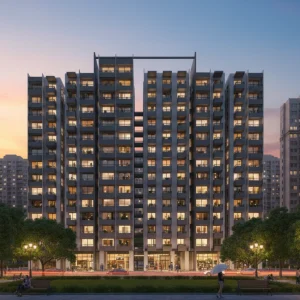
Visit: Barakah Condominium, a thoughtfully planned residential complex situated within the rapidly growing Priyanka Runway City township in Uttara, Dhaka.
4. Vegetation, Ecology, and Surrounding Context
Vegetation and surrounding ecological conditions are examined during site analysis architecture Bangladesh for both practical and design reasons. Mature trees on or adjacent to a site affect sunlight access, root systems create foundation constraints, and in some cases specific trees may be subject to preservation requirements that affect what can be removed or built adjacent to them.
Beyond the immediate site boundary, the surrounding built and natural context shapes the design in ways that extend well beyond aesthetic considerations. Neighboring building heights affect how much direct sunlight the plot receives at different times of day and different seasons — a factor that has direct implications for natural light strategy, energy performance, and the quality of outdoor spaces. Nearby water bodies affect drainage design and may impose regulatory setback requirements. Adjacent roads create noise and air quality conditions that inform window placement, acoustic design, and ventilation strategy.
Site analysis architecture Bangladesh that maps this surrounding context thoroughly allows the design to take genuine advantage of the site’s positive contextual attributes — views, natural light corridors, prevailing breezes — while designing specifically to mitigate its negative ones. A design produced without this contextual mapping is necessarily generic, unable to respond to the specific conditions that will shape the experience of the completed building.
5. Regulatory and Legal Framework: RAJUK, BNBC 2020, and DAP
Regulatory compliance is a non-negotiable component of site analysis architecture Bangladesh — and in the specific regulatory environment of Dhaka and Bangladesh more broadly, it involves a layered set of requirements that must be understood and addressed before any design work begins.
RAJUK — the Rajdhani Unnayan Kartripakkha — governs building development approval in Dhaka, imposing requirements on building height, floor area ratio, setbacks from property boundaries, and the proportion of the plot that can be covered by the building footprint. These requirements vary by zone, and understanding precisely which requirements apply to a specific site is a fundamental output of proper site analysis architecture Bangladesh. Designing without this knowledge produces plans that may require significant revision or may not receive approval at all — either outcome representing significant wasted cost and time.
BNBC 2020 — the Bangladesh National Building Code 2020 — establishes minimum standards for structural design, including earthquake resistance requirements appropriate to Bangladesh’s seismic zone, fire safety, accessibility, and a range of other building performance criteria. The code requires that structural design respond to the specific conditions of each site, including soil assessment results, rather than applying generic structural assumptions.
The Detailed Area Plan — DAP — imposes additional land use and development restrictions in the Dhaka metropolitan area that overlay and sometimes supplement RAJUK requirements. Understanding the specific DAP provisions applicable to a site is part of a thorough site analysis architecture Bangladesh process and can significantly affect what is achievable within a given plot.
Task Design & Consultancy’s architectural and engineering team conducts thorough regulatory assessment as a standard component of every site analysis architecture Bangladesh process, ensuring that design proposals are calibrated to the actual approval framework applicable to each specific plot before significant design investment is made.
6. Cultural and Historical Context
Cultural and historical context is the component of site analysis architecture Bangladesh most easily dismissed as subjective — and the one whose neglect most consistently produces buildings that feel wrong in their environment, even when they are technically competent.
Bangladesh has an extraordinarily rich architectural heritage — from the terracotta temple traditions of the historical Bengali region to the zamindari mansion typology, from vernacular delta homesteads designed around the courtyard and flood cycle to the colonial-era civic architecture that still defines much of Dhaka’s older urban fabric. A site analysis architecture Bangladesh process that identifies and genuinely responds to this heritage — understanding what has historically stood on or near the site, what architectural traditions characterize the surrounding neighborhood, and what cultural practices shape how residents relate to domestic and public space — produces buildings that belong to their place in a way that context-blind design cannot achieve.
This is not an argument for literal historicism or nostalgic reproduction of traditional forms. It is an argument that genuine site analysis architecture Bangladesh includes cultural analysis alongside physical analysis — and that the design intelligence applied to the cultural dimension of a site is just as important as the engineering intelligence applied to its soil conditions or regulatory constraints.
7. Site Analysis and Cost Efficiency
One of the most practically important arguments for thorough site analysis architecture Bangladesh is financial — and it is one that is frequently underweighted because the costs of inadequate site analysis show up later in the project rather than immediately.
Identifying soil conditions that require deeper or more complex foundations during site analysis costs a fraction of discovering them mid-construction, when the structural design must be revised and already-completed work may need to be modified. Identifying regulatory constraints before design development begins costs nothing compared to the expense of revising a substantially developed design to comply with RAJUK requirements that were not identified upfront. Understanding drainage conditions before construction begins allows the design to incorporate appropriate mitigation from the start, rather than addressing water ingress or flooding problems in the completed building — one of the most expensive and disruptive categories of remediation that Bangladeshi homeowners and commercial clients face.
The pattern is consistent: every problem that site analysis architecture Bangladesh identifies before design work begins costs significantly less to address than the same problem discovered during construction or, worse, after completion. Professional site analysis is not an added expense — it is risk management that pays back many times its cost over the life of a project.
How Site Analysis Differs for Residential Versus Commercial Projects
The core components of site analysis architecture Bangladesh apply to both residential and commercial projects, but the weighting and emphasis differ meaningfully between the two.
For residential projects, climate and orientation analysis tends to carry the most design weight — because the daily comfort of the people living in the home is directly shaped by how well the building captures natural light, manages heat, and maintains cross-ventilation. Cultural and lifestyle context matters significantly, particularly for multi-generational Bangladeshi households where spatial organization around family life, hospitality, and privacy needs to be genuinely understood rather than assumed. Soil and foundation assessment is equally critical regardless of project type.
For commercial projects — offices, restaurants, retail spaces, factories — regulatory compliance and structural load analysis often dominate the site analysis architecture Bangladesh process. The floor area ratio, setback requirements, and permitted use designations that RAJUK imposes can significantly constrain or shape what is commercially viable on a given site, and these need to be thoroughly understood before any commercial investment decision is made. For industrial projects specifically, soil bearing capacity for heavy equipment loads, drainage design for industrial water management, and access road specifications for freight vehicles all require detailed site assessment that goes well beyond what a residential site analysis covers.
Task Design & Consultancy conducts site analysis across all project types — residential developments like Barakah Condominium, commercial interiors including the firm’s portfolio of restaurant and office projects, and industrial facilities including factory and manufacturing projects compliant with ACCORD and NIRAPON audit requirements. The site analysis architecture Bangladesh process is adapted to the specific requirements of each project type while maintaining the same fundamental commitment to thorough, documented assessment before any design work begins.
Frequently Asked Questions About Site Analysis Architecture Bangladesh
How long does a thorough site analysis take? The duration depends on the project’s scale and complexity, but a professional site analysis architecture Bangladesh process for a residential project typically takes one to two weeks to complete properly — including physical site visits, soil testing if required, regulatory research, and preparation of a documented site analysis report. Rushing this stage to begin design work sooner is a false economy that consistently costs more than the time it appears to save.
Do I need site analysis for a renovation, not just new construction? Yes — while site analysis for renovation projects may be less extensive than for new builds, the core principles apply. Understanding the existing structure’s relationship to its site, identifying any soil or drainage issues that may have contributed to existing building problems, and verifying that proposed changes comply with current RAJUK and BNBC 2020 requirements are all relevant to renovation projects as much as new construction.
What happens if site analysis reveals problems with the land I have already purchased? Identifying problems early — even after purchase — is dramatically better than discovering them during or after construction. Site analysis architecture Bangladesh that reveals challenging soil conditions, drainage issues, or regulatory constraints allows the design to address them systematically rather than encountering them as construction-stage crises. In some cases, identified problems may affect the viability of certain design approaches while leaving others fully feasible — professional advice on this is exactly what the site analysis process is designed to provide.
Is site analysis the same as a soil test? Soil testing is one component of a comprehensive site analysis architecture Bangladesh process, not the whole of it. A thorough site analysis encompasses topography, climate, orientation, surrounding context, regulatory requirements, cultural context, and financial risk assessment alongside soil and foundation assessment — each of which contributes to the overall understanding of what a site requires and enables.
Seeing Site Analysis Done Right — Barakah Condominium

Visit: Barakah Condominium, a thoughtfully planned residential complex situated within the rapidly growing Priyanka Runway City township in Uttara, Dhaka.
Barakah Condominium, the twin-tower gated development at Priyanka Runway City in Uttara developed by Task Design & Consultancy, illustrates what properly conducted site analysis architecture Bangladesh produces in a finished residential project.
The development’s consistent south-facing orientation across all 72 units was not a coincidence of site geometry — it was the direct output of a climate and orientation analysis that identified this as the optimal configuration for natural light and ventilation performance throughout Bangladesh’s seasons. The 40% open space maintained across the site reflects both regulatory compliance with RAJUK requirements and a considered response to the site’s spatial context, ensuring unobstructed light access for surrounding units rather than maximizing coverage at the expense of performance. The full RAJUK approval and BNBC 2020 compliant structural design reflect thorough regulatory and technical site assessment conducted before any design development began.
Tower A is fully sold out. Tower B has a limited number of remaining units.
Task Design & Consultancy‘s Approach to Site Analysis Architecture Bangladesh
As a firm with BUET-trained architects and structural engineers, Task Design & Consultancy conducts comprehensive site analysis architecture Bangladesh as a standard first phase of every residential, commercial, and industrial project. The process covers all seven components described in this guide — topography, climate, soil, vegetation and context, regulatory framework, cultural context, and cost risk assessment — and produces a documented site analysis that directly informs every subsequent design decision.
This approach ensures that the buildings Task Design & Consultancy designs are not generic solutions applied to specific sites but genuine responses to the conditions, constraints, and opportunities that each site offers. RAJUK approval, BNBC 2020 compliance, and long-term structural performance are outcomes of this process rather than afterthoughts appended to a design already developed in isolation from site conditions.
If you are planning a residential or commercial project in Bangladesh and want to begin with the thorough site analysis that a well-designed, compliant, and durable building requires, get in touch at contact@taskdnc.com, visit taskdnc.com, or reach out via WhatsApp to arrange an initial consultation. Every successful building project begins with understanding the ground it will stand on.