Industrial Style Interior Design: 7 Proven Ways to Master It
Industrial Style Interior Design: 7 Proven Ways to Master It in Your Home
Industrial style interior design has made one of the most unlikely journeys in the history of architecture
— from the abandoned factories and warehouses of early 20th century cities to some of the most sought-after residential interiors in the world today. What began as pure utility has become a design philosophy celebrated for its honesty, its material intelligence, and its refusal to hide the structure that holds a building together.
For homeowners and designers in Dhaka, industrial style interior design offers something particularly relevant: a framework for creating spaces that feel genuinely distinctive in a residential market where most apartments look increasingly similar. Raw materials, open layouts, and functional aesthetics produce interiors that have real character — and character, in a dense urban environment, is harder to come by than square footage.
This post breaks down everything you need to know about industrial style interior design — its origins, its defining principles, its core materials, and seven proven ways to apply it in a contemporary residential setting.
Where Industrial Style Interior Design Came From
Understanding the origins of industrial style interior design explains why it looks the way it does — and why those design choices work so well in residential spaces.
The aesthetic was born during the Industrial Revolution, when factories and warehouses were designed around a single principle: maximum efficiency. Structure was exposed because hiding it served no purpose. Brick walls were left bare because plastering them added cost without adding function. Steel beams, concrete floors, and visible ductwork were not design choices — they were the building itself, stripped of anything superfluous.
In the late 20th century, as manufacturing moved out of city centers and these buildings were abandoned, urban developers and artists began converting them into residential spaces. The bones of the buildings were already extraordinary — double-height ceilings, massive windows, open floor plans with no load-bearing interior walls, genuine material depth in every surface. The industrial aesthetic was not invented. It was discovered, by people who recognized that what the factories had been doing for decades was exactly what architecture had been trying to achieve all along.
This movement produced the loft apartment — perhaps the most influential residential typology of the last fifty years — and the design vocabulary that came with it. Industrial style interior design today is both a tribute to that history and a genuinely functional approach to residential space.
What Makes Industrial Style Interior Design Distinctive
Industrial style interior design is defined by a set of principles that work together as a system rather than a collection of independent choices.
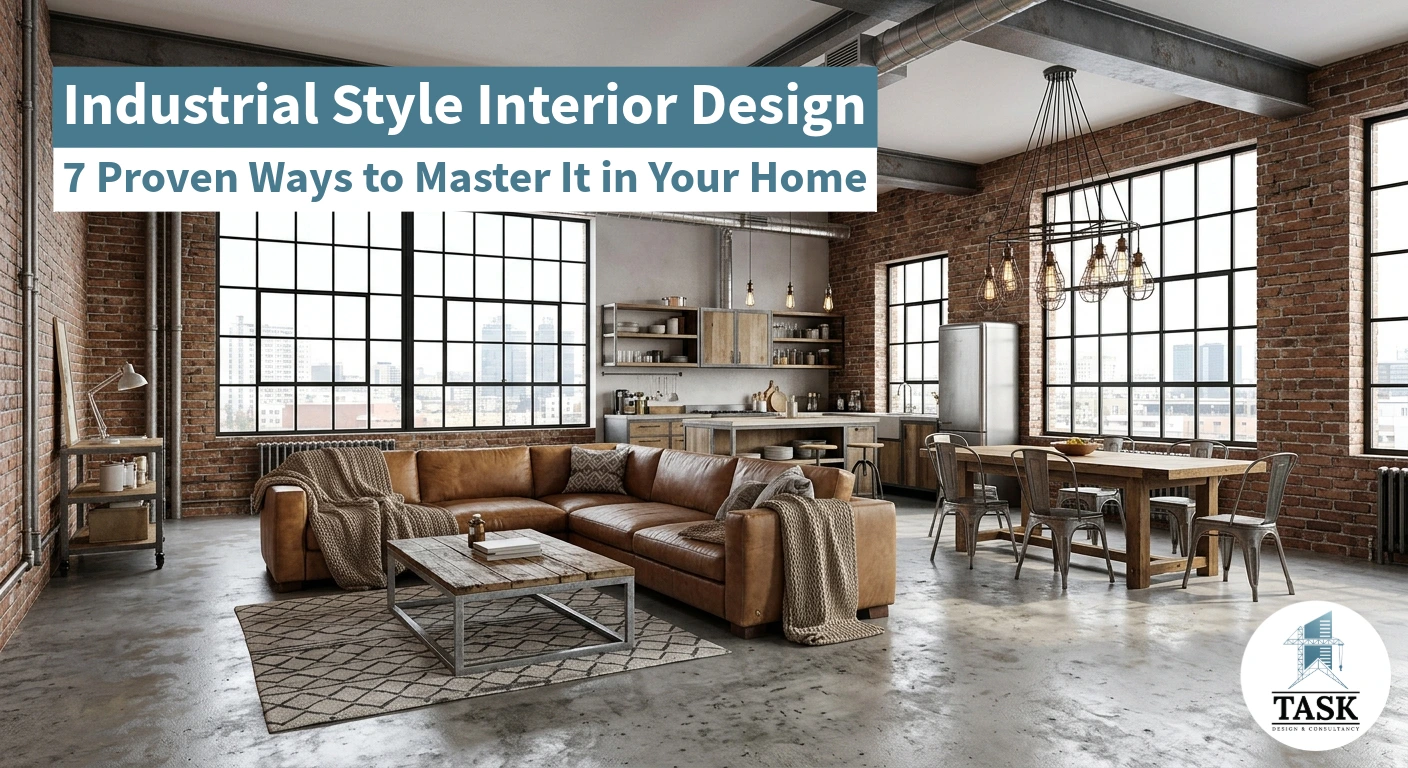
Honest materiality. Industrial style interior design never hides its structure. Brick is left exposed. Concrete is left raw. Steel beams remain visible. Ductwork runs openly across ceilings. This material honesty produces spaces that have depth and texture built into their bones — not applied to their surfaces.
Open spatial organization. Industrial buildings were designed without internal partitions because the work being done inside them required unobstructed floor space. Industrial style interior design carries this into residential contexts as open-plan living — kitchen, dining, and living areas organized around shared space rather than separated into individual rooms.
Functional aesthetics. Every element in industrial style interior design earns its place by doing something. Lighting fixtures are purposeful and visible. Storage is open and organized. Furniture is built to be used rather than displayed. The aesthetic is a byproduct of genuine function, not a layer applied over it.
Embracing imperfection. Industrial style interior design finds beauty in wear, age, and the marks that use leaves on materials. Scratched concrete, weathered timber, patinated metal — these are not flaws to be corrected. They are the record of a material’s history, and they are valued precisely because they cannot be replicated.
1. Expose What the Building Already Has
The single most impactful thing you can do in industrial style interior design is reveal what is already there. Most residential buildings contain raw material value that conventional finishing conceals — brick walls behind plaster, concrete ceilings above suspended tiles, structural steel behind cladding.
Revealing these elements transforms a space more dramatically than any addition of new materials or furniture:
Strip plaster from a brick wall in the living area and leave the brick clean and sealed — the texture and warmth this produces is impossible to replicate artificially. Remove a suspended ceiling in a room with sufficient height and expose the structural slab above — the additional volume changes how the space feels entirely. Leave concrete columns or beams in their natural state rather than boxing them in or plastering over them.
In new builds designed around industrial style interior design principles, these elements are planned from the start rather than revealed through demolition. The structural system becomes the primary decorative element — which is both honest and economical.
For residential projects in Dhaka, where most apartment construction uses reinforced concrete as the primary structural material, this approach is particularly natural. The structure is already there. Industrial style interior design simply asks you to stop hiding it.
2. Master the Industrial Color Palette
Industrial style interior design works within a specific color range that is inseparable from the aesthetic’s character — and understanding it prevents the most common mistake, which is adding color in a way that fights the materials rather than supporting them.
The foundation palette draws directly from industrial materials:
Charcoal gray and dark anthracite from steel and cast iron. Warm mid-tone brown from aged timber and leather. Cool off-white and light gray from concrete and plaster. Deep terracotta red from exposed brick. Black as the accent tone for frames, fixtures, and hardware.
Within this foundation, industrial style interior design uses color accents selectively and deliberately:
Deep navy, forest green, and burnt rust work as accent wall colors that complement the base palette without disrupting it. Warm metals — brass, copper, bronze — add warmth and refinement against the cooler structural materials. Textiles in warm neutral tones — oatmeal, stone, camel — soften the harder surfaces without contradicting the aesthetic.
The principle is restraint. Industrial style interior design achieves its character through material texture and spatial organization rather than color variety. Adding too many colors dilutes the effect immediately.
3. Choose Furniture That Earns Its Place
Furniture selection in industrial style interior design follows the same logic as material selection: every piece should be honest about what it is made from and functional in how it is used.
The furniture that works best:
Metal-framed pieces — dining tables with steel legs and reclaimed timber tops, shelving systems in powder-coated steel, bed frames in blackened iron. These are the direct furniture equivalents of the exposed structural materials in the space itself. Worn leather sofas and armchairs that develop character with use — the patina of aged leather is one of the few soft furnishing materials that genuinely improves over time. Reclaimed timber pieces — coffee tables made from old factory flooring, dining benches from salvaged scaffold boards, shelving from repurposed industrial pallets. Vintage and industrial-sourced pieces — factory stools, workshop trolleys repurposed as side tables, locker cabinets used as bedroom storage.
The furniture arrangement in industrial style interior design typically follows the open-plan logic of the space itself — furniture grouped to define zones within a large open floor rather than contained within separate rooms. A sofa and coffee table define the living zone. A dining table and pendant light define the eating zone. A kitchen island defines the cooking zone. The transitions between them are open and fluid.
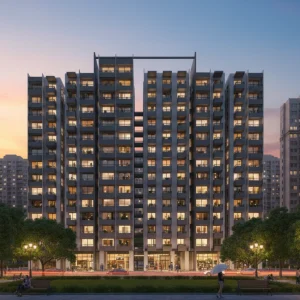
Visit: Barakah Condominium, a thoughtfully planned residential complex situated within the rapidly growing Priyanka Runway City township in Uttara, Dhaka.
4. Get the Lighting Right
Lighting is one of the most powerful tools in industrial style interior design — and one of the most distinctive. Industrial lighting fixtures are bold, functional, and unapologetically visible. They do not try to disappear into the ceiling. They announce themselves.
The fixtures that define the aesthetic:
Edison bulb pendants — either individually as statement pieces over dining tables or in clusters for living area lighting. The visible filament is integral to the look. Cage pendants and wall sconces — metal frames around bare bulbs that reference factory and workshop lighting directly. Track lighting on exposed ceiling rails — functional, adjustable, and completely honest about what it is doing. Floor lamps with articulated arms and metal shades — the workshop task lamp brought into the living room. Oversized pendants in blackened steel or raw brass hanging at unexpected heights over kitchen islands or reading corners.
In industrial style interior design, natural light is equally important. The large steel-framed windows characteristic of the aesthetic are not just visual elements — they flood spaces with the kind of direct, high-quality natural light that makes raw materials look their best. Where architectural constraints limit window size, skylights and light tubes can compensate.
5. Use Texture to Balance the Hardness
One of the most common failures in industrial style interior design is spaces that feel cold, hard, and uncomfortable — the result of applying industrial materials without understanding how to balance them.
The aesthetic works because it balances hard and soft, rough and refined, industrial and domestic. Without that balance it becomes an industrial building that someone happens to sleep in rather than a home that uses industrial principles to create a genuinely livable space.
The textures that provide balance:
Natural fiber textiles — jute rugs, cotton throws, linen cushions — that introduce softness and warmth against concrete floors and steel furniture. Timber surfaces that bring organic warmth into otherwise mineral-dominated spaces. Plants — particularly large-format specimens like rubber trees, fiddle leaf figs, and monstera — that bring life and color into spaces where both might otherwise be absent. Leather, as discussed in furniture selection, that softens visually while maintaining material honesty. Books, ceramics, and collected objects that accumulate personal meaning over time and resist the tendency of industrial spaces to feel sterile.
The balance point in industrial style interior design is found when the space feels honest about its structural character without feeling indifferent to human comfort.
6. Apply Industrial Style Interior Design in Every Room
Industrial style interior design is sometimes applied only to open-plan living areas and left behind at the bedroom or kitchen door. This produces inconsistency that undermines the coherence of the overall design. The aesthetic works better when it runs consistently through the whole home — adapted in intensity for different rooms but never abandoned entirely.
Living room: The primary showcase for industrial style interior design. Exposed brick or concrete feature wall, open ceiling, steel-framed windows, leather and timber furniture, pendant lighting, large natural fiber rug to anchor the seating zone.
Kitchen: Exposed pipe work and open shelving in steel or timber. Concrete or stone countertops. Black or dark gray cabinetry with matte metal hardware. Pendant lights over the island. Open storage for cookware that treats functional objects as display.
Bedroom: Lower intensity industrial style interior design — raw materials present but softened by textiles and warm lighting. An iron bed frame with quality cotton or linen bedding. Reclaimed timber flooring or concrete with a large rug. Exposed brick on one wall. Pendant or bedside lighting with visible bulbs kept warm rather than cool in color temperature.
Bathroom: Concrete or terrazzo surfaces. Black steel fixtures and hardware. Exposed plumbing where the layout allows. A large mirror with a raw metal frame. Simple open shelving rather than closed cabinetry.
7. Adaptive Reuse — The Most Authentic Expression of Industrial Style
The most authentic form of industrial style interior design remains the adaptive reuse project — converting an existing industrial structure into a residential space rather than building the aesthetic from scratch.
Dhaka’s urban fabric contains a significant number of older commercial and industrial buildings whose structural character makes them genuinely exceptional candidates for residential conversion. Double-height spaces, large window openings, robust concrete or brick construction, and generous floor plates provide exactly the raw material that industrial style interior design works best with.
The advantages of adaptive reuse for industrial style interior design:
The authenticity is real. Genuine aged brick, original timber beams, concrete that has developed patina over decades — these materials have a quality and character that no new build reproduction achieves. The environmental case is strong. Retaining the existing structure avoids the demolition waste and embodied carbon of new construction. The spatial possibilities are often extraordinary. Industrial buildings were designed for uses that required generous ceiling heights and open floor plans — residential spaces that inherit these proportions feel genuinely different from purpose-built apartments.
At Task Design & Consultancy, adaptive reuse and industrial style interior design projects are approached with the same structural rigor and design intelligence as any new residential build. The firm’s BUET-trained engineers assess existing structures for their conversion potential and develop designs that take full advantage of what the original building offers while meeting all current RAJUK and BNBC 2020 compliance requirements.
Industrial Style Interior Design and Sustainability
Industrial style interior design and sustainable architecture share a consistent direction that is worth understanding explicitly rather than leaving as an implication.
The preference for reclaimed and recycled materials in industrial style interior design directly reduces the demand for new material production — and with it the energy consumption and carbon emissions that production involves. Salvaged timber, reclaimed brick, and recycled steel all carry significantly lower embodied carbon than their new equivalents.
The adaptive reuse projects that represent industrial style interior design at its most authentic are among the most sustainable forms of residential development available — preserving the embodied carbon of existing structures rather than releasing it through demolition, and avoiding the full carbon cost of new construction.
The open floor plans and large windows characteristic of industrial style interior design support passive climate strategies — natural ventilation, daylighting, and thermal mass — that reduce ongoing energy consumption throughout the building’s life.
For residential projects in Dhaka, where energy costs are a real concern and the urban heat environment is intensifying, the overlap between industrial style interior design principles and sustainable design logic is both practically relevant and financially beneficial.
Is Industrial Style Interior Design Right for Your Home?
Industrial style interior design is not universally appropriate. Like any strong aesthetic, it works best when it suits both the architecture and the people living in it.
It works particularly well when:
The home has or can accommodate open floor plans and generous ceiling heights. The occupants genuinely appreciate raw materials and are comfortable with spaces that feel less finished than conventional interiors. The location is urban — industrial style interior design feels native to city environments in a way it rarely does in suburban or rural contexts. The client values durability and material honesty over softness and conventional refinement.
It requires more careful consideration when:
The space is small and low-ceilinged — industrial aesthetics need volume to breathe, and confined spaces with raw materials can feel oppressive rather than characterful. The occupants want warmth and coziness as the primary domestic quality — industrial style can achieve warmth but it requires more deliberate effort than styles built around it from the start.
The question to ask is not whether industrial style interior design is attractive — it consistently is. The question is whether it is honest for the space and the people who will live in it.
Task Design & Consultancy’s Approach to Industrial Style Interior Design
Task Design & Consultancy approaches industrial style interior design projects in Dhaka with both design intelligence and structural expertise. The firm’s BUET-trained architects and engineers understand the material requirements, structural implications, and spatial logic that make industrial style interior design work at a high level — whether the project is a new residential build designed around industrial principles or an adaptive reuse conversion of an existing structure.
If you are planning a residential interior in Dhaka and want to explore what industrial style interior design could look like in your specific space, get in touch at contact@taskdnc.com or visit taskdnc.com.